AI & LLM
Leo
Built an AI Transcription & Research Platform from Scratch
- Role
- Sole developer
- Timeline
- Architecture to handover
- Team
- Solo, alongside founding team
- Live link
- www.tryleo.ai
- 4
- subscription tiers
- Solo
- architecture, APIs, frontend, deployment
- Used by
- Cambridge, Oxford, Yale, Stanford researchers
The problem
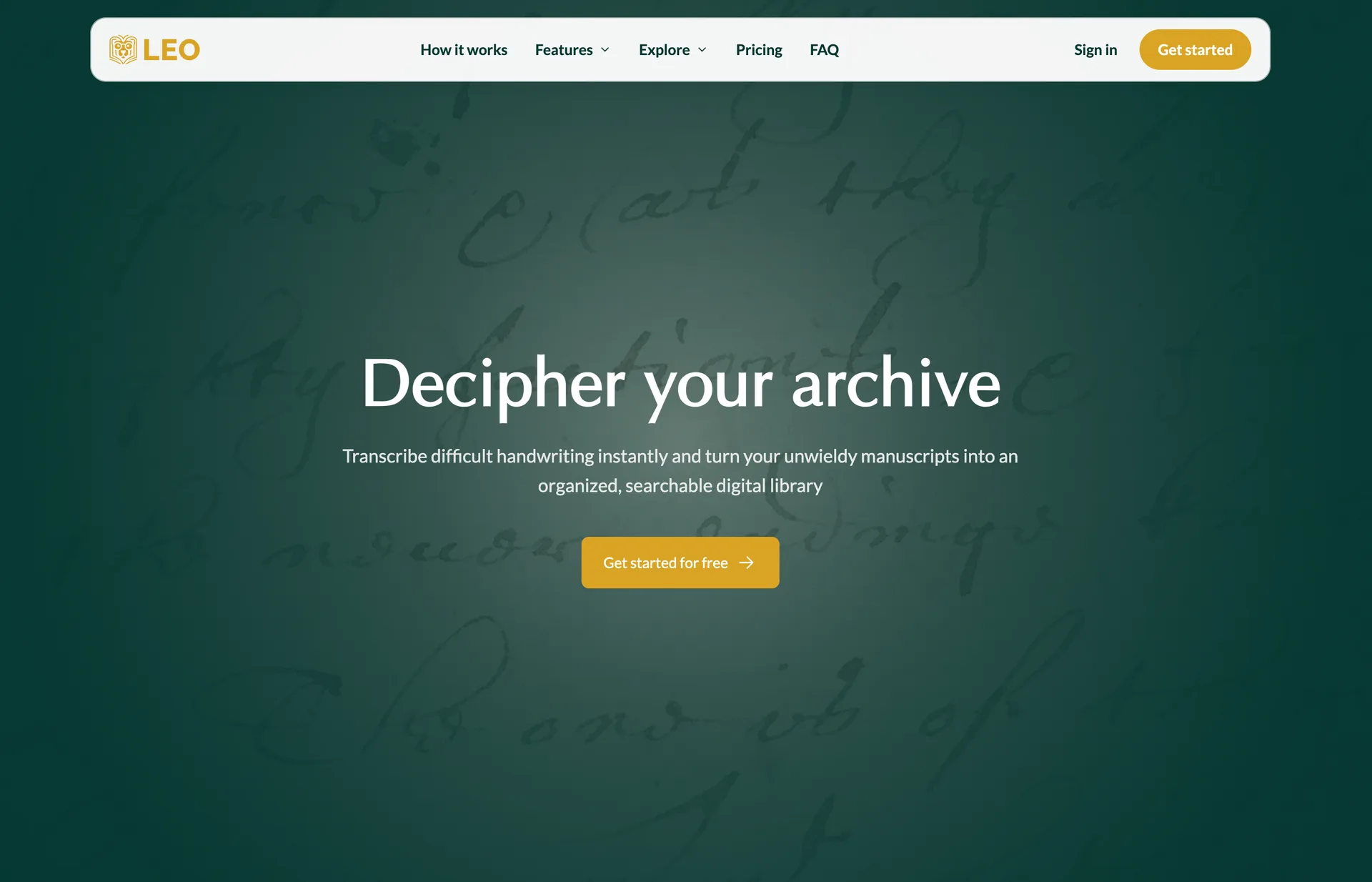
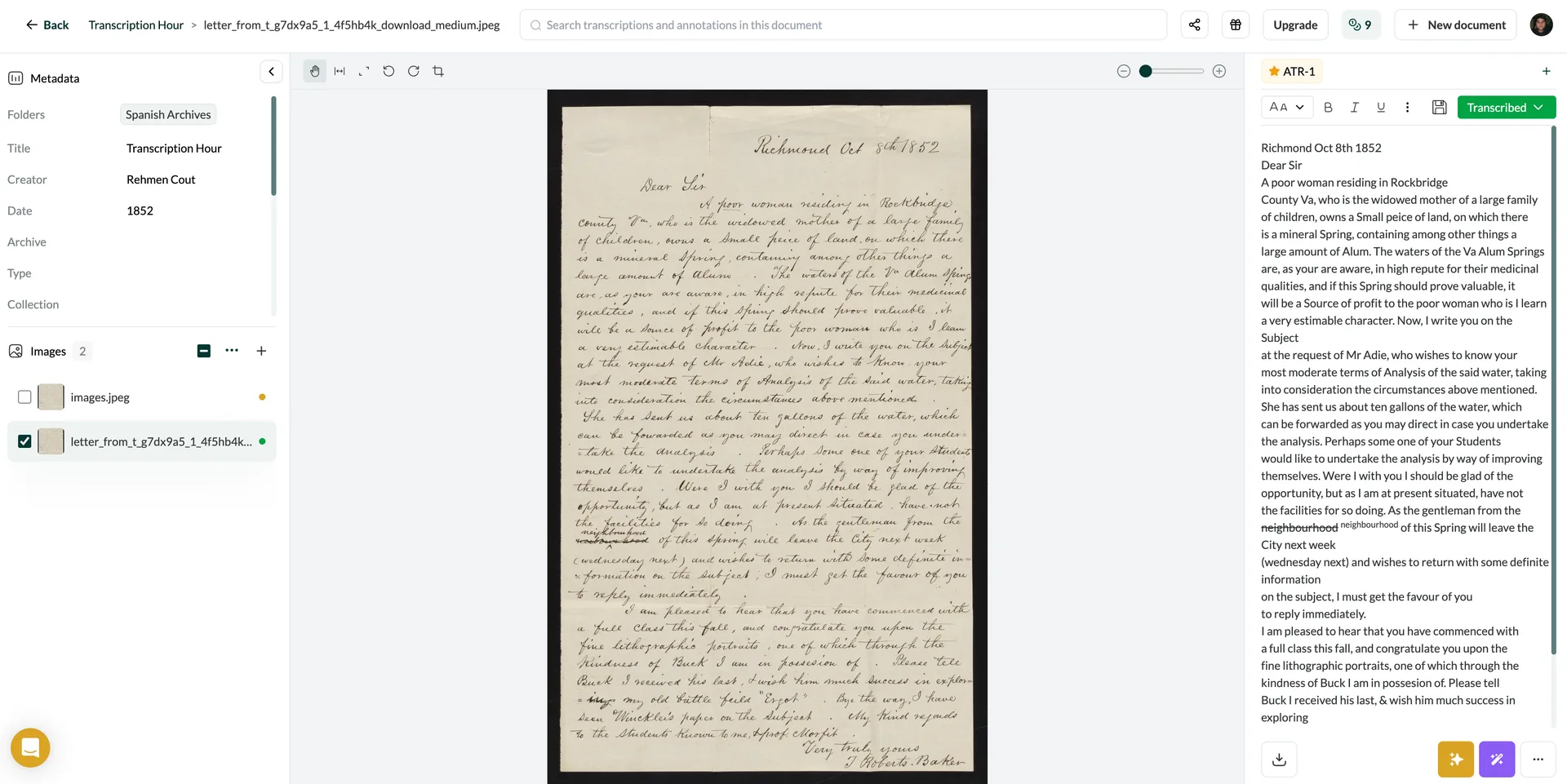
Historians and archivists work with handwritten manuscripts standard OCR cannot read, and existing tools require manually transcribing dozens of pages before producing usable output. Leo needed a platform where researchers upload documents, get accurate transcriptions immediately, then organize, search, annotate, and share an entire archive.
My approach
Architecture & data model
Independently designed the application architecture and PostgreSQL schema on Supabase: documents, transcriptions, collections, folders, metadata, per-user credit balances. All backend APIs in Nest.js/TypeScript.
Document pipeline
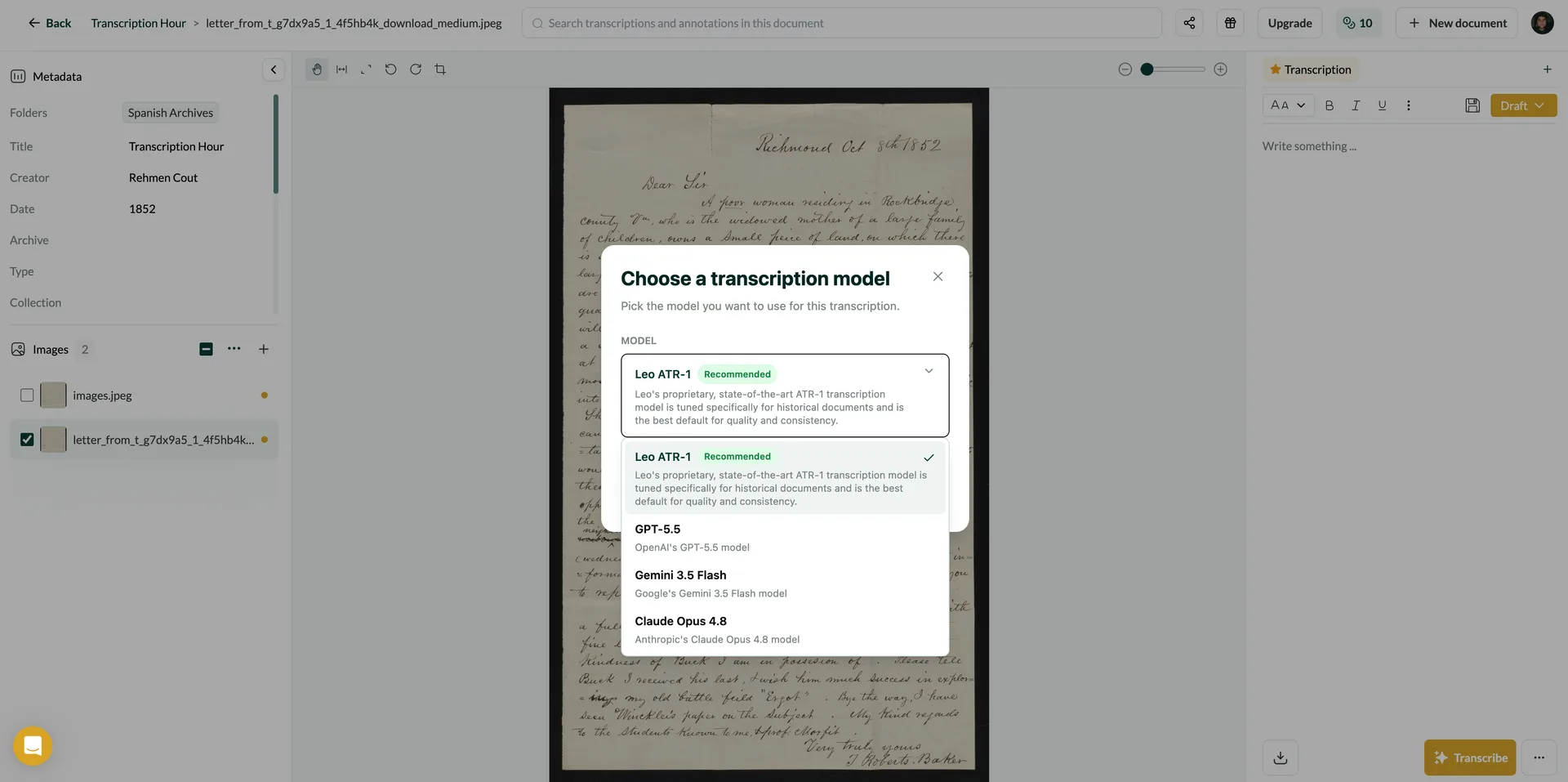
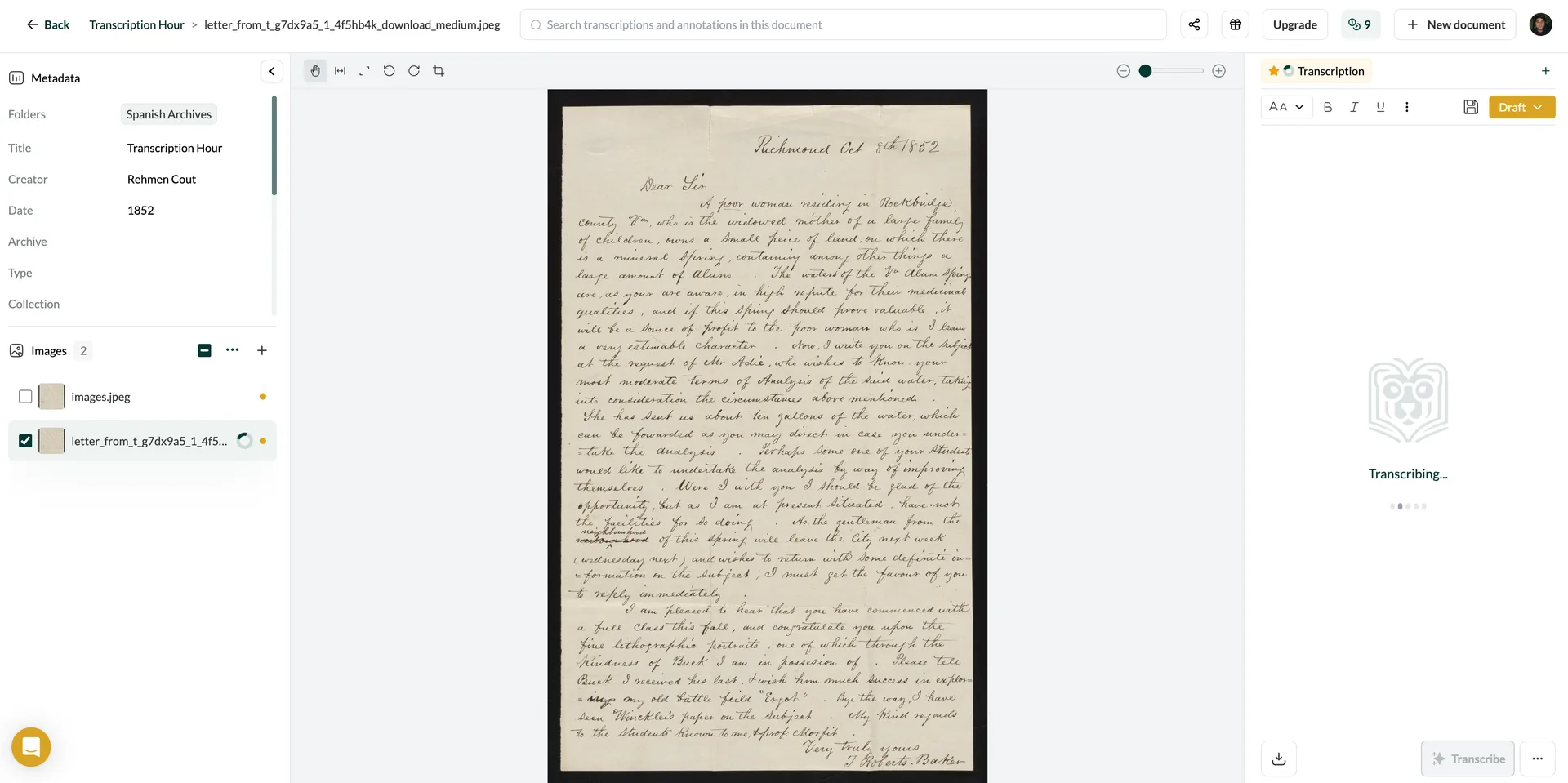
Upload and processing flow carrying document images through transcription and back into structured, editable text, output preserved alongside the source image for verification. Tuned a multi-model routing layer across transcription providers.
Credits & subscriptions
Tiered plans with differing storage and monthly credit allowances plus purchasable non-expiring credits: credit deduction, monthly resets, graceful downgrade behavior.
Organization, search & export
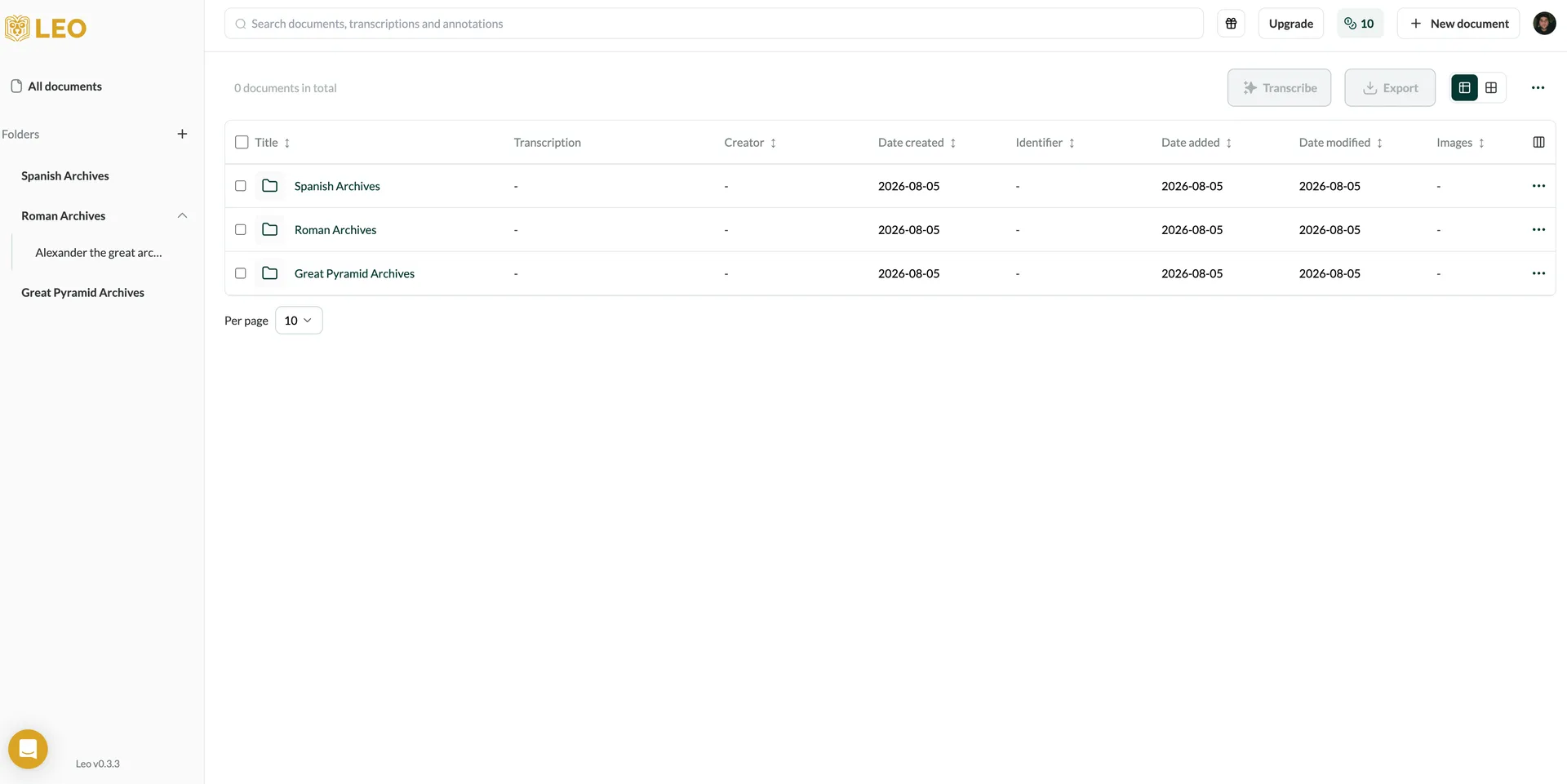
Custom folders, full-text search across transcriptions and notes, metadata filtering, export to multiple formats.
Sharing
Secure public share links to distribute documents without an account, with recipients able to copy shared documents into their own collections.
System shape
Frontend
React, Next.js, TypeScript, Tailwind CSS
Backend
Nest.js, Node.js
Data
PostgreSQL, Supabase, Clerk
Infra
Vercel, Railway
AI
AI Integration
Screens
Stack
Frontend
- React
- Next.js
- TypeScript
- Tailwind CSS
Backend
- Nest.js
- Node.js
Data
- PostgreSQL
- Supabase
- Clerk
Infra
- Vercel
- Railway
AI
- AI Integration
Result
A live production platform, built solo and delivered complete, used by professional historians, archivists, and graduate researchers at universities including Cambridge, Oxford, Yale, and Stanford, running a four-tier subscription model with credit-based metering.